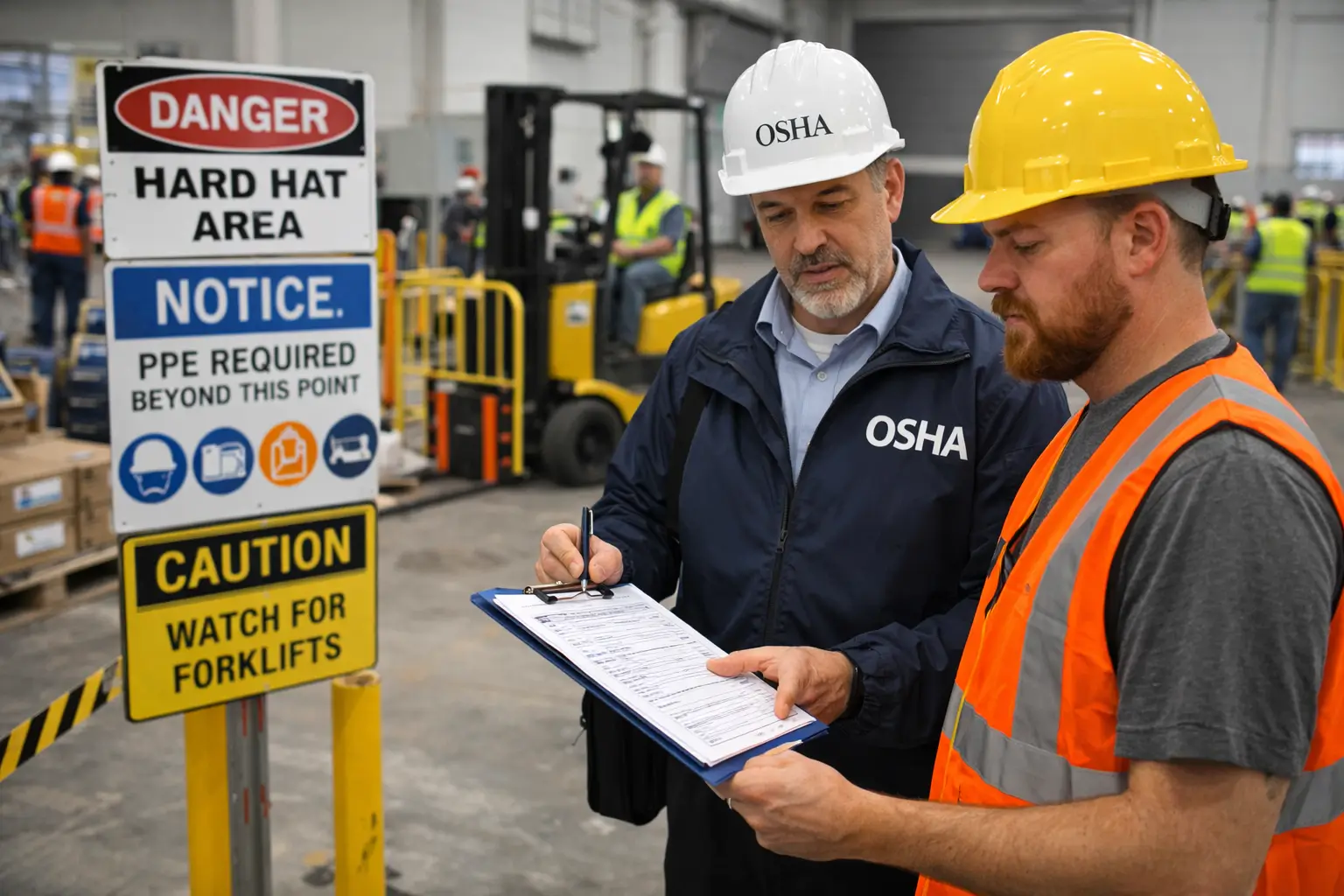
Getting an OSHA inspection can feel stressful. But if you’re prepared, there’s nothing to worry about. This checklist will help you stay ready and keep your workplace safe.
Why You Need This Checklist
OSHA inspectors can show up without warning. They might come because of a complaint, an accident, or just a random check. Having a checklist helps you spot problems before they do.
Before the Inspector Arrives
General Workplace Safety
Walking Areas
- Floors are clean and dry
- No tripping hazards like cords or debris
- Aisles are clear and marked
- Emergency exits are accessible
- Exit signs are lit and visible
Housekeeping
- Work areas are organized
- Trash is disposed of properly
- Spills are cleaned immediately
- Storage areas are neat
Lighting
- All areas are well-lit
- Broken bulbs are replaced
- Emergency lighting works
Personal Protective Equipment (PPE)
- Hard hats are available where needed
- Safety glasses provided
- Gloves match the job hazards
- Hearing protection in loud areas
- Respirators were required
- Steel-toe boots if needed
- High-visibility vests for certain areas
- All PPE is in good condition
- Workers know when to use PPE
Fire Safety
- Fire extinguishers are mounted and accessible
- Extinguishers were inspected this month
- Workers know how to use extinguishers
- Sprinkler heads aren’t blocked
- Fire alarms work
- Evacuation routes are posted
- The emergency assembly point is marked
Electrical Safety
- No frayed or damaged cords
- Outlets aren’t overloaded
- Extension cords are temporary only
- Electrical panels are accessible
- Panel doors are closed
- Circuits are labeled
- Ground fault circuit interrupters (GFCIs) are installed where needed
Machinery and Equipment
- Guards are in place on all machines
- Emergency stops work
- Lockout/tagout procedures are posted
- Lockout devices are available
- Maintenance records are current
- Only trained workers operate the equipment
Hazard Communication
- Chemical containers are labeled
- Safety Data Sheets (SDS) are accessible
- Workers are trained on chemical hazards
- The hazard communication program is written down
Fall Protection
- Guardrails are installed where needed
- Harnesses and lanyards are available
- Anchor points are secure
- Ladders are in good shape
- Scaffolding is properly built
- Workers are trained on fall protection
Emergency Preparedness
- First aid kits are stocked
- Eyewash stations work (tested weekly)
- Emergency showers function
- Emergency phone numbers posted
- The evacuation plan is current
Record Keeping
- OSHA 300 Log is up to date
- OSHA 300A Summary was posted (February 1 – April 30)
- Injury records are accurate
- Training records are organized
- Inspection records are filed
During the Inspection
Opening Conference
- Greet the inspector professionally
- Ask to see credentials
- Ask why they’re there
- Designate someone to accompany them
- Consider having a worker representative join
- Take notes
The Walk-Through
- Stay with the inspector
- Answer questions honestly
- Don’t volunteer extra information
- Take photos of what they photograph
- Note what they measure or test
- Be polite and cooperative
Employee Interviews
- OSHA can talk to workers privately
- Don’t interfere with interviews
- Workers should answer truthfully
- Workers can’t be punished for talking to OSHA
Closing Conference
- Listen to their findings
- Ask questions about citations
- Understand the timeline for fixes
- Get copies of everything
- Thank them for their time
After the Inspection
If You Get Citations
- Review them carefully
- Fix problems immediately
- Document all corrections
- Meet all deadlines
- Consider contesting if you disagree
If No Citations
- Still fix any noted hazards
- Update your safety program
- Keep improving
Special Area Checklists
Construction Sites
- Workers wear hard hats
- Scaffolding is inspected daily
- Excavations are properly shored
- Concrete and masonry work is safe
- Tools are in good condition
Warehouses
- Forklifts are inspected daily
- Only certified operators drive forklifts
- Loading docks are safe
- Racking is stable
- Dock plates are secure
Manufacturing
- Production equipment is guarded
- Noise levels are measured
- Ventilation systems work
- Chemical processes are documented
- Quality control maintains safety
Offices
- Ergonomic workstations
- Electrical cords are managed
- No blocked exits
- Proper lighting
- Clean air quality
Monthly Safety Check
Do these things every month:
- Walk through your facility
- Test emergency equipment
- Review injury logs
- Update training if needed
- Fix small problems before they grow
- Talk to workers about concerns
Tips for Success
Be Proactive: Don’t wait for OSHA. Check your workplace regularly.
Train Everyone: Workers should know safety rules and how to report hazards.
Fix Things Fast: When you spot a problem, handle it right away.
Document Everything: Keep records of inspections, training, and repairs.
Stay Honest: Never lie to an inspector. It makes everything worse.
Ask for Help: If you don’t understand something, ask OSHA for guidance.
The Bottom Line
This checklist isn’t just about passing an inspection. It’s about creating a workplace where people are safe every single day.
Print this list. Walk your facility. Check things off. Fix what’s broken. Train your team. When the inspector shows up, you’ll be ready.
Remember, OSHA isn’t the enemy. They want the same thing you should want—workers who go home healthy at the end of their shift. Use this checklist to make that happen.
Leave a Reply