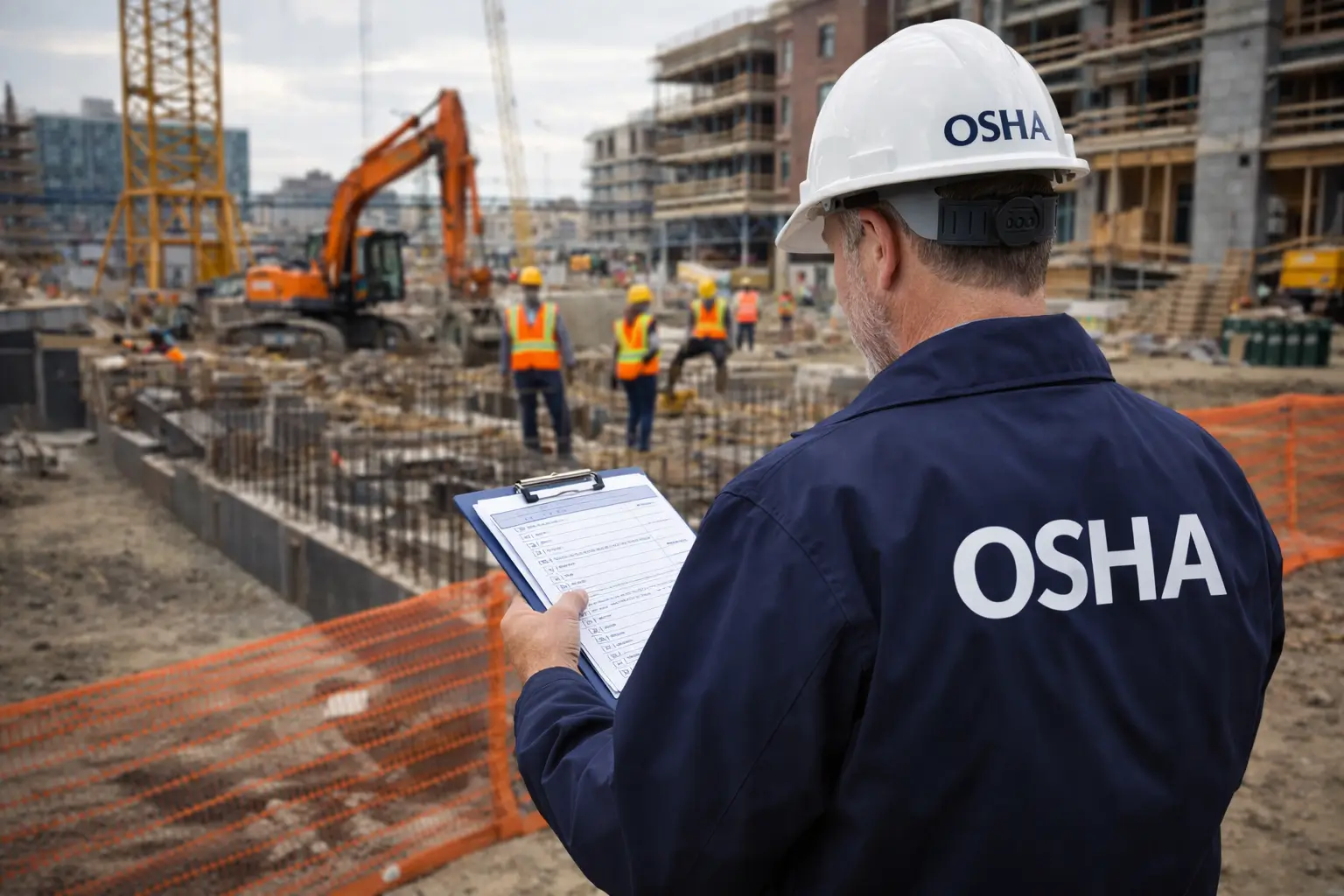
If you’re a business owner, you might wonder when OSHA will show up at your door. The truth is, there’s no set schedule. Let’s talk about how often inspections happen and what triggers them.
The Short Answer
OSHA doesn’t inspect every workplace on a regular schedule. With millions of workplaces in America and only about 2,000 inspectors, it’s impossible to check everyone frequently.
Most workplaces will never get an OSHA inspection. Some might get inspected once every few years. Others might see inspectors multiple times in a single year.
How OSHA Decides Who to Inspect
OSHA uses a priority system. They go to the most dangerous situations first. Here’s how they decide:
Priority 1: Imminent Danger
If there’s an immediate threat to life, OSHA responds within 24 hours. This is their top priority.
Example: A building might collapse, exposed electrical wires could electrocute someone, or toxic gas could leak.
Priority 2: Severe Injuries or Deaths
When someone dies on the job or multiple workers go to the hospital, companies must report it to OSHA. Inspectors will come quickly.
You must report:
- Any workplace death (within 8 hours)
- Any hospitalization of one or more workers (within 24 hours)
- Any amputation or loss of an eye (within 24 hours)
After you report, expect an inspection.
Priority 3: Worker Complaints
If an employee reports unsafe conditions, OSHA may inspect. They investigate complaints that describe serious hazards first.
Complaints can be:
- Named (worker gives their name)
- Anonymous (worker stays private)
- Written or called in
OSHA takes complaints seriously. About 25% of inspections come from worker complaints.
Priority 4: Referrals
Other government agencies, news reports, or the public might alert OSHA to dangers. These lead to inspections, too.
Priority 5: Follow-Up Inspections
If you got cited before, OSHA might return to check if you fixed the problems. They also revisit workplaces with repeated violations.
Priority 6: Planned or Programmed Inspections
These are random inspections based on:
High-Hazard Industries: Construction, manufacturing, and industries with high injury rates get inspected more often.
Site-Specific Targeting: OSHA targets workplaces with high injury and illness rates based on data companies submit.
National or Local Emphasis Programs: OSHA focuses on specific hazards like falls, trenching, or silica exposure.
Industry Makes a Difference
Your industry affects how often you might see OSHA:
High-Risk Industries (more frequent inspections):
- Construction sites
- Manufacturing plants
- Warehouses
- Chemical facilities
- Agriculture
- Oil and gas operations
Lower-Risk Industries (rare inspections):
- Retail stores
- Office buildings
- Financial services
- Professional services
The Reality of Inspection Frequency
Let’s be honest about the numbers:
With over 8 million workplaces in the U.S. and only about 2,000 federal and state inspectors, OSHA can inspect roughly 40,000 to 50,000 workplaces per year.
Do the math: If OSHA inspected workplaces at random, it would take about 160 years to visit every workplace once.
What this means:
- Most small businesses will never be inspected
- High-risk workplaces get inspected more often
- Construction sites might see inspectors multiple times during a project
- If you have a good safety record, you’re less likely to be inspected
State OSHA Programs
Half of the U.S. states run their own OSHA programs. These state programs often do more inspections than federal OSHA because they have more inspectors per workplace.
States with their own programs include:
- California
- Washington
- Oregon
- Minnesota
- Michigan
- North Carolina
- Virginia
- And about 20 others
If you’re in a state-plan state, you might get inspected more often.
What Increases Your Chances of an Inspection?
Certain things make it more likely OSHA will visit:
High Injury Rates: If your company reports lots of injuries, you go on their target list.
Past Violations: Been cited before? They’ll check on you again.
High-Risk Work: Doing dangerous work like roofing, trenching, or demolition catches their attention.
Worker Complaints: Unhappy employees often call OSHA.
Fatalities or Hospitalizations: These trigger automatic inspections.
Media Coverage: If accidents make the news, OSHA takes notice.
Random Selection: Sometimes you just get picked from the high-hazard list.
What Decreases Your Chances?
Low Injury Rates: Keep workers safe, keep good records, and you’re less likely to be targeted.
Good History: No past violations means you’re not on their radar.
Lower-Risk Industry: Office work doesn’t attract inspectors like construction does.
Strong Safety Program: Companies with clear safety programs and training get fewer complaints.
Can You Avoid Inspections Forever?
Maybe, maybe not. Even perfect companies can get randomly selected. But here’s what you can do:
Keep Injury Rates Low: Track and prevent injuries.
Fix Hazards Fast: Don’t let small problems become big ones.
Train Workers: Educated employees have fewer accidents.
Listen to Concerns: When workers report issues, handle them before they call OSHA.
Document Everything: Show you care about safety with good records.
Stay Compliant: Follow all OSHA standards for your industry.
Inspection Types and Timing
When OSHA does come, the inspection type varies:
Comprehensive Inspection: They check everything. It can take hours or even days.
Partial Inspection: They focus on specific hazards. Usually faster.
Follow-Up: Quick check to see if you fixed previous violations.
Most inspections take 3-4 hours, but complex ones at large sites can take much longer.
How to Be Ready
Since you can’t predict when OSHA might show up, stay ready:
- Do monthly safety walks
- Keep your 300 Log updated
- Train employees regularly
- Fix hazards immediately
- Post required notices
- Have safety records organized
Think of it like a pop quiz. If you study every day, you’ll pass no matter when the test comes.
The Bottom Line
There’s no magic number for how often OSHA inspects workplaces. Most businesses go years without seeing an inspector. Some never do.
But don’t count on flying under the radar. One accident, one complaint, or one spot on their targeting list, and inspectors will show up.
The best strategy isn’t to avoid inspections. It’s to run your workplace so safely that even if OSHA shows up tomorrow, you’d pass with flying colors.
Safety shouldn’t be about avoiding inspections. It should be about protecting the people who work for you. Do that right, and OSHA visits won’t worry you at all.
Leave a Reply