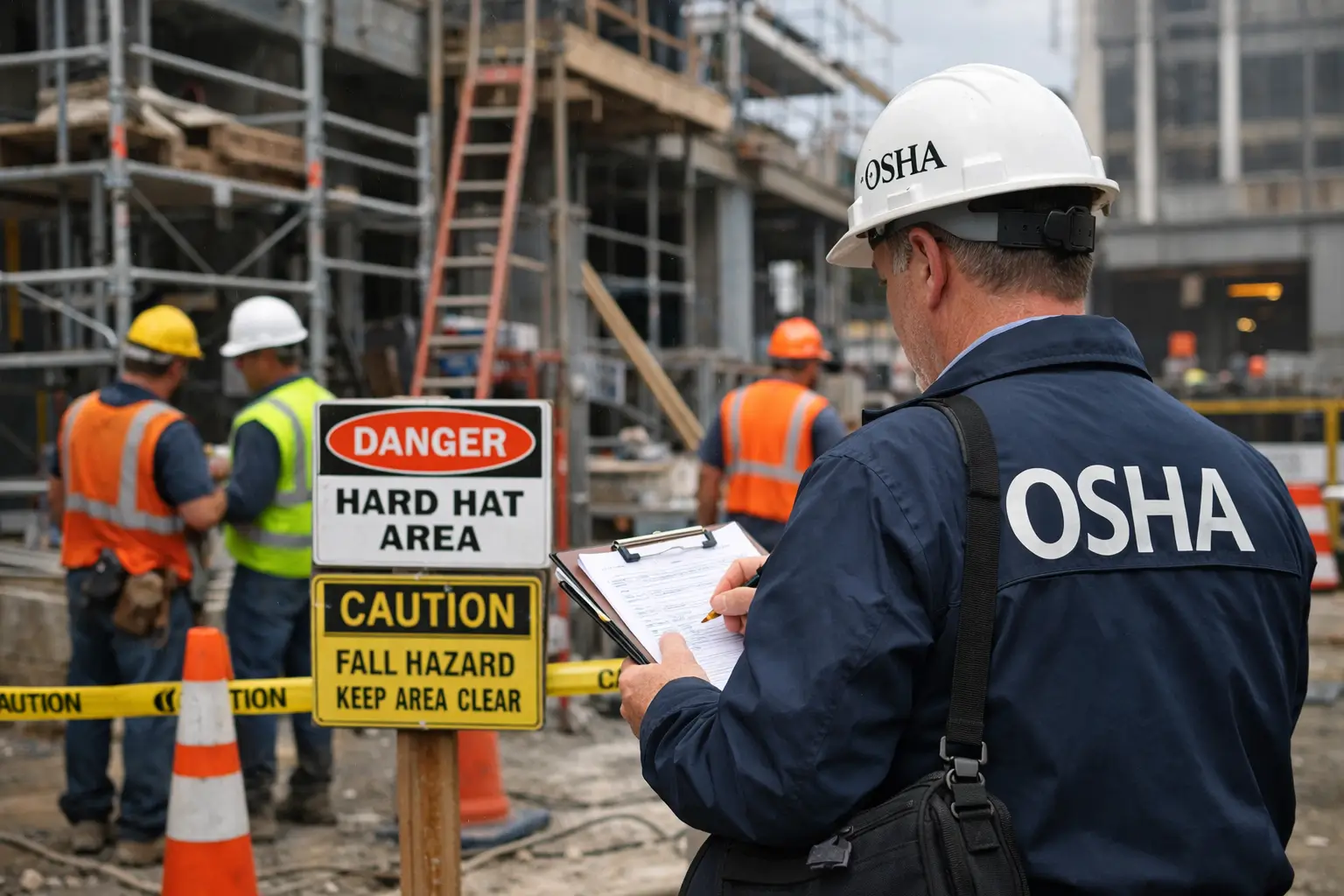
Every worker deserves to be safe on the job. That’s where OSHA comes in. But what happens when companies don’t follow the rules? Let’s discuss OSHA violations and their significance.
What is OSHA?
OSHA stands for the Occupational Safety and Health Administration. It’s a government agency that was established in 1970 to protect American workers. OSHA sets safety rules for workplaces and makes sure companies follow them.
So, what’s an OSHA violation?
An OSHA violation happens when a company breaks safety rules. This could be anything from a small paperwork mistake to a serious danger that could hurt or kill someone.
Types of Violations
OSHA groups violations by how serious they are:
De Minimis Violations
These are tiny issues that don’t actually affect safety. For example, a missing label on a container that holds harmless materials. You won’t get fined for these.
Other-Than-Serious Violations
These break the rules but probably won’t cause major injuries or death. Companies can be fined a few thousand dollars for each one.
Serious Violations
This is when something could cause death or serious harm. Maybe there’s no fall protection on a roof, or electrical wires are exposed. The company knew about it or should have known. These violations come with bigger fines.
Willful Violations
These are the worst. The company knew the rules and ignored them on purpose. They just didn’t care about worker safety. Fines for these can reach over $100,000 per violation.
Repeated Violations
When a company gets caught for the same problem twice within five years, it’s a repeated violation. The fines go up because the company didn’t learn the first time.
Failure to Abate
If a company doesn’t fix a problem by the deadline, they get hit with this violation. Extra fines pile up every day until they fix it.
Common Problems OSHA Finds
Here are some violations inspectors see all the time:
- Workers not wearing fall protection
- Missing safety labels on chemicals
- No respirators when needed
- Unsafe scaffolding
- Broken ladders
- Machines without proper guards
- Forklift safety issues
- Exposed electrical hazards
- Workers not given protective equipment
What Happens When You Violate OSHA Rules?
Breaking OSHA rules can hurt your business in many ways:
Money: Fines range from thousands to over $100,000 per violation.
Legal Trouble: If someone dies because of a willful violation, the company could face criminal charges.
Work Stops: OSHA can shut down your operation until you fix the problem.
Bad Reputation: News of violations becomes public and can damage your company’s image.
Higher Insurance: Your workers’ compensation costs will likely go up.
Unhappy Workers: When people don’t feel safe, they don’t work well.
How to Stay Out of Trouble
Want to avoid violations? Here’s what works:
Check Your Workplace Regularly: Look for problems before OSHA does.
Train Your Workers: Make sure everyone knows how to stay safe and follow the rules.
Keep Good Records: Write down your training sessions, safety inspections, and meetings.
Make Safety Important: Don’t just check boxes. Actually care about keeping people safe.
Stay Current: Safety rules change. Keep up with what’s new.
Listen to Your Workers: Let employees report dangers without worrying about getting in trouble.
What Workers Should Know
You have rights. You can complain to OSHA if your workplace isn’t safe. Your boss can’t fire you or punish you for speaking up. But you also need to do your part by following safety rules and using the protective gear you’re given.
The Big Picture
OSHA violations aren’t just about paperwork and fines. They’re about real people who could get hurt or killed at work.
When companies follow OSHA rules, everyone wins. Workers go home safe. Companies avoid fines and lawsuits. Productivity stays high. It’s really that simple.
Safety doesn’t have to be complicated. Follow the rules, fix problems quickly, and treat your workers like they matter. Because they do.