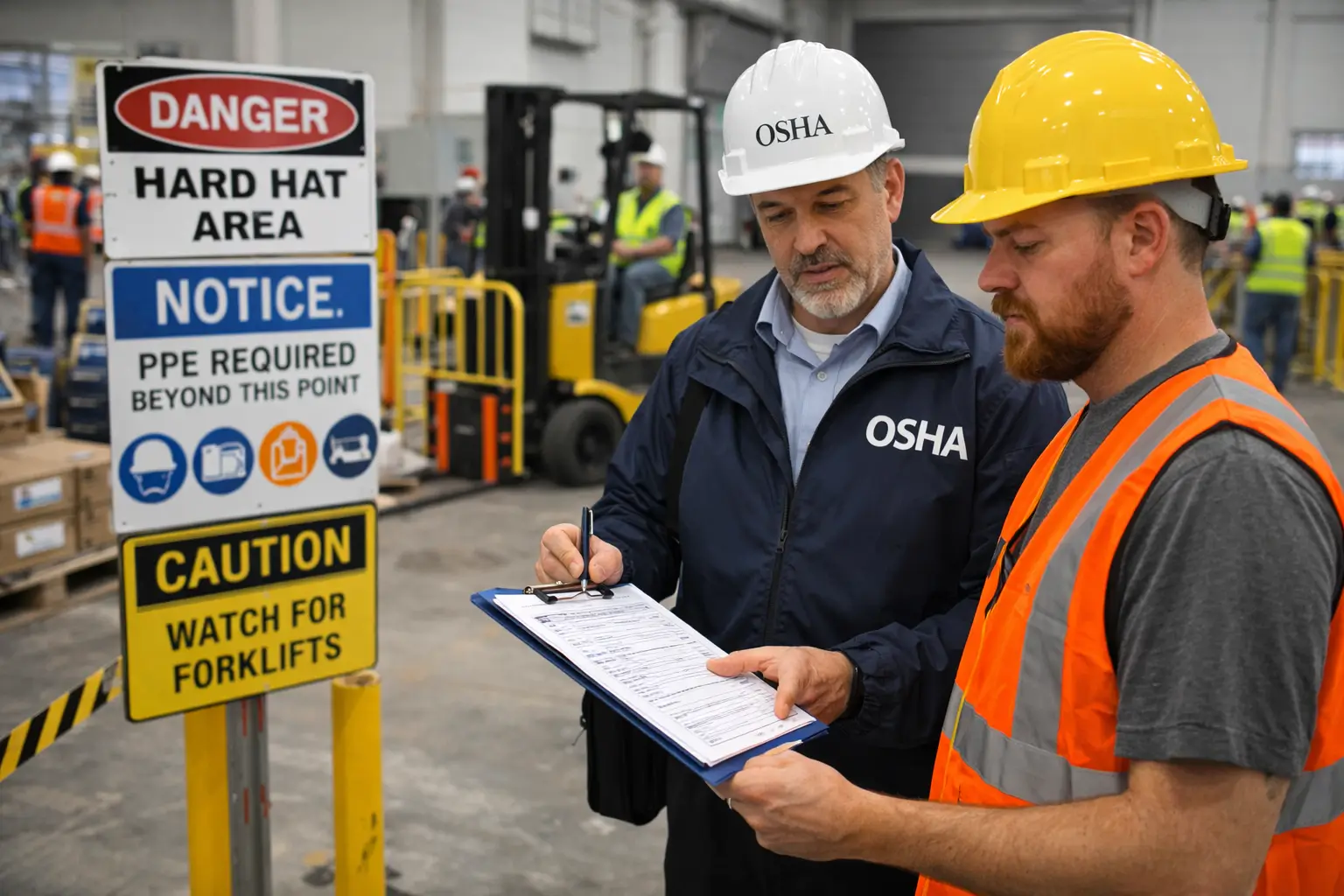
OSHA inspectors don’t just randomly wander into workplaces. Something specific usually brings them to your door. Understanding these triggers can help you stay prepared and maintain a safe workplace.
The Main Triggers
OSHA inspections happen for specific reasons. Here are the most common triggers, ranked by how quickly OSHA responds:
1. Imminent Danger Situations
Response Time: Within 24 hours
This is OSHA’s highest priority. Imminent danger means someone could die or get seriously hurt right now, not someday in the future.
Examples:
- A trench could collapse on workers
- Electrical wires are exposed and sparking
- A structure is about to fall
- Toxic chemicals are leaking
- Equipment might explode
- Workers are at risk of falling from heights without protection
When OSHA gets an imminent danger report, inspectors drop everything and respond immediately. They might even get a court order to shut down your operation until the danger is fixed.
2. Workplace Fatalities
Response Time: Same day or next day
When someone dies at work, you must notify OSHA within 8 hours. After you report it, expect inspectors to arrive promptly.
OSHA investigates every workplace death to find out:
- What happened
- Why it happened
- If safety violations contributed
- How to prevent it from happening again
Even if the death seems like a freak accident, OSHA will still investigate.
3. Catastrophes and Hospitalizations
Response Time: Within a few days
You must report these within 24 hours:
- Any worker’s hospitalization
- Any amputation (losing a finger, toe, limb)
- Any loss of an eye
What counts as hospitalization? It means actual admission to a hospital for inpatient care. Emergency room visits without admission don’t count, unless the injury is severe.
If three workers get hurt in one incident and need emergency care, you definitely report it. OSHA will investigate.
4. Employee Complaints
Response Time: Varies (formal complaints get inspections)
Workers can report unsafe conditions to OSHA anonymously or with their name. This is one of the most common triggers.
Complaints that usually trigger inspections:
- Serious safety hazards
- Missing safety equipment
- Dangerous chemical exposures
- Fall hazards
- Electrical dangers
- Reports of multiple issues
How it works:
- The worker files a complaint online, by phone, or by mail
- OSHA reviews it
- If it’s serious, they schedule an inspection
- If it’s minor, they might contact you by phone or letter first
About 1 in 4 OSHA inspections start with a worker complaint.
Important: It’s illegal to punish or fire workers for reporting safety issues to OSHA. That’s called retaliation, and it comes with serious penalties.
5. Referrals from Other Agencies
Response Time: Within weeks
Sometimes other organizations alert OSHA to problems:
- Local fire departments
- Police departments
- State agencies
- Other federal agencies
- News media reports
- Public reports of dangerous conditions
For example, if firefighters respond to a chemical spill at your facility, they might refer the case to OSHA.
6. Follow-Up Inspections
Response Time: By the abatement deadline
If you’ve been cited before, OSHA might return to check if you fixed the problems. They do follow-ups for:
- Willful violations
- Repeat violations
- Failure to abate (you didn’t fix it by the deadline)
- Serious violations
Missing your correction deadline is a guaranteed way to get another visit.
7. Programmed or Planned Inspections
Response Time: No specific timeline
These are the “random” inspections, but they’re not really random. OSHA targets specific industries and workplaces based on data.
What puts you on the list:
High Injury Rates: Every year, some companies must submit injury data to OSHA. If your rates are high, you go on the Site-Specific Targeting list.
High-Hazard Industries: Certain industries get inspected more often:
- Construction (especially residential)
- Manufacturing
- Warehousing
- Nursing homes
- Agriculture
National Emphasis Programs (NEPs): OSHA focuses campaigns on specific hazards, like
- Fall protection
- Trenching and excavation
- Silica exposure
- Amputations
- Heat illness
- COVID-19 (in recent years)
Local Emphasis Programs (LEPs): Regional OSHA offices target local issues like specific industries or hazards common in that area.
If you’re in a targeted industry or have high injury numbers, you might get picked for a planned inspection.
What Doesn’t Usually Trigger Inspections
Some things people worry about don’t actually bring OSHA to your door:
- Anonymous tips without specific hazard details
- Minor first aid injuries
- Near-misses (unless they get media attention)
- General complaints about working conditions
- Disputes between employees and management
- Someone is just being upset with the company
OSHA focuses on actual safety hazards, not workplace drama.
Red Flags That Attract Attention
Certain patterns make OSHA more likely to inspect you:
Multiple Complaints: One complaint might get overlooked. Three complaints in six months? That’s a pattern.
Industry Reputation: If your industry or company type has a bad safety record, you’re watched more closely.
Past Violations: Been cited before? You’re on their radar now.
News Coverage: Accidents that make the news often trigger inspections.
High Turnover: Lots of workers coming and going can signal problems.
Workers’ Compensation Claims: Patterns of injuries show up in insurance data.
How to Avoid Triggering an Inspection
You can’t control everything, but you can reduce your risk:
Prevent Injuries: This is number one. Fewer injuries mean fewer reports.
Fix Hazards Fast: Don’t let small problems become big ones.
Train Your Team: Workers who know safety rules have fewer accidents.
Listen to Workers: When employees raise concerns, address them immediately. If you fix the issue, they won’t call OSHA.
Keep Good Records: Show you take safety seriously with documentation.
Stay Compliant: Follow all rules for your industry.
Report honestly: If you must report an incident, do it accurately and on time.
Create a Safety Culture: Make safety a priority, not an afterthought.
What Happens After a Trigger
Once something triggers an inspection, here’s what happens:
- OSHA schedules the inspection (timeframe depends on priority)
- The inspector shows up, usually without advance notice
- Opening conference with you
- Walk-through of your workplace
- Employee interviews
- Closing conference
- Citations are issued if violations are found (usually within 6 months)
The process can take a few hours or several days, depending on the size of your workplace and what they find.
Special Note About Retaliation
If a worker’s complaint triggers an inspection, remember: you cannot retaliate against that worker. Ever.
Retaliation includes:
- Firing them
- Demoting them
- Cutting their hours
- Giving them worse assignments
- Creating a hostile environment
- Any punishment for reporting safety concerns
Retaliation violations come with steep fines and can result in criminal charges. It’s not worth it.
The Bottom Line
Most OSHA inspections don’t just happen. Something specific triggers them—usually a death, injury, complaint, or your company being on a target list.
The best way to avoid inspections isn’t to hide or hope you don’t get caught. It’s to run a genuinely safe workplace where:
- Workers don’t get hurt
- Hazards get fixed quickly
- Everyone follows safety rules
- People trust you enough not to call OSHA
If you do all that, even if OSHA shows up, you’ll be fine. And more importantly, your workers will go home safe every day.
That’s the real goal anyway.